Exploring Regal Grandeur: Castles Around London
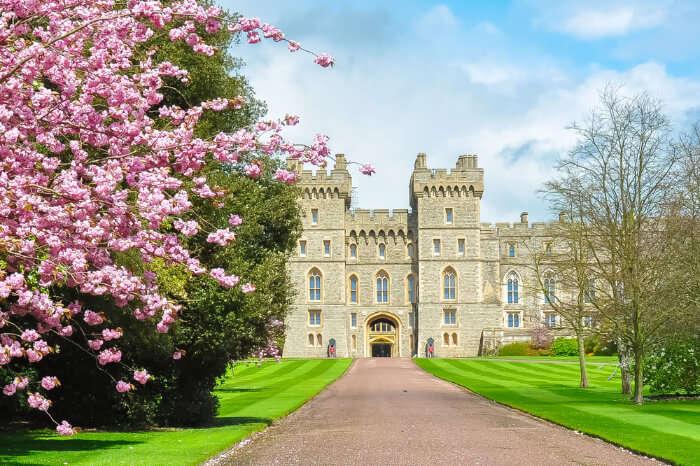
The Tower of London: A Fortress of British History
Architectural Marvels of the Tower
The Tower of London has stood as a symbol of power and fortitude for nearly a millennium. Its architecture is a blend of various styles, evolving through its long history. Visitors are mesmerized by the White Tower, which is the oldest part of the complex, notable for its Norman military architecture. Surrounded by impenetrable fortifications, the Tower has served as royal palace, prison, and even a zoo.
For those planning a visit to this iconic structure and in need of accommodation, options abound. One can find suitable lodgings nearby, ranging from luxury suites to cozy rooms that fit a range of budgets and preferences. To explore the possibilities, take a look at www.hotels-of-london.com for a comprehensive list of places to stay, ensuring your trip to this historic landmark is as comfortable as it is memorable.
Notable Historical Events at the Tower
The Tower's history is as fascinating as it is grim. It was at the center of some of the most momentous events in English history, including the execution of Anne Boleyn, the second wife of Henry VIII, and the mysterious disappearance of the young Princes in the Tower. It has also housed the Crown Jewels since the 17th century, a testament to its enduring significance.
Windsor Castle: Royal Residence and Timeless Elegance
State Apartments and St. George’s Chapel
Windsor Castle captivates visitors with its lavish State Apartments adorned with masterpieces by Rembrandt and Leonardo da Vinci. The Semi-State Rooms, only open during the winter months, offer an intimate glimpse into the royal lifestyle. St. George's Chapel is another gem within the grounds, notable as the site of royal weddings and the resting place of ten monarchs, including Henry VIII and Charles I.
Royal Ceremonies and Guard Changing Rituals
The pomp and circumstance of Windsor can be witnessed in the time-honored tradition of the Changing of the Guard. A precise choreography of music and movement, the ceremony is a vibrant display of British military heritage. Below is a step-by-step guide to the Changing of the Guard at Windsor Castle:
Step | Activity | Location | Time | Notes |
|---|---|---|---|---|
1 | Guard Assembly | Barrack's courtyard | 10:40 AM | Marching and band formation begins |
2 | Inspection | Guard Room | Before 11:00 AM | Inspection of the guards by the Captain |
3 | March to Castle | From Barracks to Castle | 11:00 AM | Trooping through the town |
4 | Official Ceremony | Castle's Lower Ward | 11:00 AM - 11:30 AM | Exchanging the guard duty |
5 | March Back | From Castle to Barracks | After 11:30 AM | Departure of old guard |
Majestic Castles A Stone’s Throw from the Capital
Just beyond the bustling city streets of the capital lie treasures of regal splendor waiting to be discovered. These castles, mere moments away by travel, offer a glimpse into the past and a retreat into the grandeur of monarchy. Let us guide you through these historical marvels, each with its own story and allure.
Hampton Court Palace: Tudor Tales and Baroque Palatial Beauty
Stepping into the opulence of Hampton Court Palace is like walking back in time. With its blend of Tudor architecture and later Baroque additions, this palace has seen the unfolding of significant chapters in British history. It was the heart of King Henry VIII's court and has been an important fixture through the centuries.
The Enigmatic Hauntings of Hampton Court
The palace walls are not just steeped in history; they are shrouded in mystery as well. Visitors and staff have often spoken of ghostly apparitions and inexplicable chills in the air. Whispered tales of Catherine Howard's screams and glimpses of spectral figures in Tudor garb make a visit to Hampton Court a thrilling experience.
The Great Hall and Noteworthy Artifacts
The Great Hall is the palace's grand centerpiece, its hammer-beam roof holding stories of grand banquets and royal gatherings. Among its many artifacts, one can admire the famed Triumphs of Caesar by Mantegna, a series of paintings that are considered among the most significant Italian Renaissance artworks in England.
Leeds Castle: Floating on Water Amidst Verdant Gardens
Leeds Castle, often referred to as the 'loveliest castle in the world', is a vision of medieval beauty, surrounded by a tranquil moat and captivating gardens. If walls could talk, they'd speak of a thousand years of history, encompassing important events and hosting distinguished personalities.
The Castle's Fascinating Exhibition of Dog Collars
This castle is also home to an unexpected gem - one of the largest collections of dog collars in the world. From practical iron collars of the Middle Ages to luxurious Victorian pieces adorned with velvet and studs, this exhibit is a testament to the historical evolution of man’s best friend by our side.
Historical Relevance and Key Figures
Period | Key Figure | Contribution/Role | Interesting Fact |
|---|---|---|---|
9th Century | Lady of Leeds | First recorded owner | Origins of the castle's name |
12th Century | King Edward I | Expanded the castle significantly | Added the 'Gloriette' |
16th Century | Henry VIII | Transformed the castle for his first wife, Catherine of Aragon | Added a royal palace motif |
20th Century | Lady Baillie | Restored the castle in the 1920s | Brought modern luxuries to the castle |
Crowns of the Countryside: Enchanting Castles in London’s Vicinity
Arundel Castle: A Medieval Tapestry Brought to Life
Specialty Gardens and the Collector Earl's Garden
Arundel Castle is not only a historical treasure but also a horticultural haven, with its gardens offering a kaleidoscope of color and variety. The centerpiece is the Collector Earl's Garden, created in 2008 to commemorate the 400th anniversary of the 14th Earl of Arundel. This Eden is known for its intricate fountains and the impressive Oberon's Palace, a nod to the Earl's passion for the arts.
The castle’s gardens showcase a myriad of plant species, with seasonal displays that ensure a visual delight year-round. The Organic Kitchen Garden supplies the castle's restaurant with herbs, fruit, and vegetables, while the Rose Garden provides a romantic backdrop with its fragrant blooms.
Arundel Castle’s Role in Historical Movie Settings
Arundel Castle has served as a picturesque setting for numerous films, thanks to its authentic medieval architecture and timeless beauty. Its halls, chambers, and grounds have been a backdrop for tales of historical fiction and dramas that transport audiences straight into England's past.
Visitors might recognize the castle from high-profile productions that have brought the legends of yesteryears to life. Each room in the castle tells a story, often mirrored by the tales told through cinema, wherein the castle has been more than just a setting; it's been a central character.
Rochester Castle: Standing Tall with Norman Craftsmanship
The Great Keep and Siege Experiences
The majestic Great Keep of Rochester Castle is a testament to Norman engineering, dominating the surrounding landscape. Visitors can embark on a journey into medieval life, exploring the tower's network of rooms — an experience that brings history to life.
The siege of 1215 marks a particularly noteworthy chapter in the castle's history. To truly understand the magnitude, one can follow in the footsteps of the defenders, ascending the stone steps to the battlements, and peering out toward the neighbouring cathedral and the River Medway — imagining the besieging army below.
Military Architecture at Rochester
Feature | Description | Period |
|---|---|---|
Great Keep | The central stronghold of the castle, known for surviving multiple sieges. | 1130 |
Curtain Walls | Enclosing the bailey, these high walls protected residents from attacks. | 12th Century |
Round Towers | Replaced older square towers, offering better defense against mining. | 14th Century |
Moat | A water-filled ditch that slowed down the advance of attackers. | Medieval |
Gunports | Adaptations for the castle to withstand gunpowder weapons. | 16th Century |
Rochester Castle is a chronicle of military architectural evolution, from its early Norman roots to adaptations in the age of artillery. Each stratagem and modification tells the story of changing warfare, and the enduring might of this fortress.
Arundel Castle: A Medieval Tapestry Brought to Life
Specialty Gardens and the Collector Earl's Garden
Arundel Castle is not only a historical treasure but also a horticultural haven, with its gardens offering a kaleidoscope of color and variety. The centerpiece is the Collector Earl's Garden, created in 2008 to commemorate the 400th anniversary of the 14th Earl of Arundel. This Eden is known for its intricate fountains and the impressive Oberon's Palace, a nod to the Earl's passion for the arts.
The castle’s gardens showcase a myriad of plant species, with seasonal displays that ensure a visual delight year-round. The Organic Kitchen Garden supplies the castle's restaurant with herbs, fruit, and vegetables, while the Rose Garden provides a romantic backdrop with its fragrant blooms.
Arundel Castle’s Role in Historical Movie Settings
Arundel Castle has served as a picturesque setting for numerous films, thanks to its authentic medieval architecture and timeless beauty. Its halls, chambers, and grounds have been a backdrop for tales of historical fiction and dramas that transport audiences straight into England's past.
Visitors might recognize the castle from high-profile productions that have brought the legends of yesteryears to life. Each room in the castle tells a story, often mirrored by the tales told through cinema, wherein the castle has been more than just a setting; it's been a central character.
Specialty Gardens and the Collector Earl's Garden
Arundel Castle is not only a historical treasure but also a horticultural haven, with its gardens offering a kaleidoscope of color and variety. The centerpiece is the Collector Earl's Garden, created in 2008 to commemorate the 400th anniversary of the 14th Earl of Arundel. This Eden is known for its intricate fountains and the impressive Oberon's Palace, a nod to the Earl's passion for the arts.
The castle’s gardens showcase a myriad of plant species, with seasonal displays that ensure a visual delight year-round. The Organic Kitchen Garden supplies the castle's restaurant with herbs, fruit, and vegetables, while the Rose Garden provides a romantic backdrop with its fragrant blooms.
Arundel Castle’s Role in Historical Movie Settings
Arundel Castle has served as a picturesque setting for numerous films, thanks to its authentic medieval architecture and timeless beauty. Its halls, chambers, and grounds have been a backdrop for tales of historical fiction and dramas that transport audiences straight into England's past.
Visitors might recognize the castle from high-profile productions that have brought the legends of yesteryears to life. Each room in the castle tells a story, often mirrored by the tales told through cinema, wherein the castle has been more than just a setting; it's been a central character.
Rochester Castle: Standing Tall with Norman Craftsmanship
The Great Keep and Siege Experiences
The majestic Great Keep of Rochester Castle is a testament to Norman engineering, dominating the surrounding landscape. Visitors can embark on a journey into medieval life, exploring the tower's network of rooms — an experience that brings history to life.
The siege of 1215 marks a particularly noteworthy chapter in the castle's history. To truly understand the magnitude, one can follow in the footsteps of the defenders, ascending the stone steps to the battlements, and peering out toward the neighbouring cathedral and the River Medway — imagining the besieging army below.
Military Architecture at Rochester
Feature | Description | Period |
|---|---|---|
Great Keep | The central stronghold of the castle, known for surviving multiple sieges. | 1130 |
Curtain Walls | Enclosing the bailey, these high walls protected residents from attacks. | 12th Century |
Round Towers | Replaced older square towers, offering better defense against mining. | 14th Century |
Moat | A water-filled ditch that slowed down the advance of attackers. | Medieval |
Gunports | Adaptations for the castle to withstand gunpowder weapons. | 16th Century |
Rochester Castle is a chronicle of military architectural evolution, from its early Norman roots to adaptations in the age of artillery. Each stratagem and modification tells the story of changing warfare, and the enduring might of this fortress.
The Great Keep and Siege Experiences
The majestic Great Keep of Rochester Castle is a testament to Norman engineering, dominating the surrounding landscape. Visitors can embark on a journey into medieval life, exploring the tower's network of rooms — an experience that brings history to life.
The siege of 1215 marks a particularly noteworthy chapter in the castle's history. To truly understand the magnitude, one can follow in the footsteps of the defenders, ascending the stone steps to the battlements, and peering out toward the neighbouring cathedral and the River Medway — imagining the besieging army below.
Military Architecture at Rochester
Feature | Description | Period |
|---|---|---|
Great Keep | The central stronghold of the castle, known for surviving multiple sieges. | 1130 |
Curtain Walls | Enclosing the bailey, these high walls protected residents from attacks. | 12th Century |
Round Towers | Replaced older square towers, offering better defense against mining. | 14th Century |
Moat | A water-filled ditch that slowed down the advance of attackers. | Medieval |
Gunports | Adaptations for the castle to withstand gunpowder weapons. | 16th Century |
Rochester Castle is a chronicle of military architectural evolution, from its early Norman roots to adaptations in the age of artillery. Each stratagem and modification tells the story of changing warfare, and the enduring might of this fortress.
The Legacy of Stone and Sword: Uncovering Neighboring Castles
Hever Castle: Echoes of the Boleyn Family Legacy
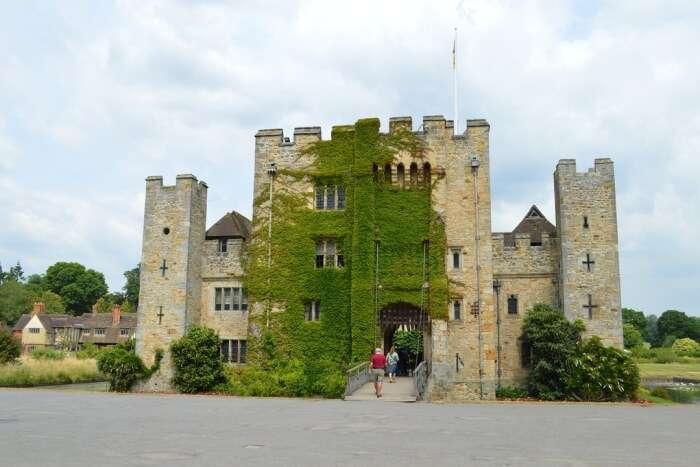
Nestled in the Kent countryside lies the exquisite Hever Castle, once the childhood home of Anne Boleyn, the ill-fated queen of Henry VIII. Visitors stepping through its portcullis are immediately transported to the Tudor era, with meticulously preserved rooms and captivating gardens that tell the tales of intrigue, romance, and tragedy.
Hever’s Inner Castle and Anne Boleyn’s Influence
Inside Hever Castle, the Boleyn family's touch can still be felt. From the grand panelled rooms to the intimate prayer books with handwritten notes by Anne herself, the castle resonates with the personal history of one of England's most enigmatic queens. Retrace her steps in the book of hours room or ponder her thoughts as you wander through her opulent chambers.
Festivals and Events Recounting the Tudor Era
Hever Castle further brings the past to life with a variety of festivals and events that transport visitors back in time. Tableaux and re-enactments often fill the grounds, offering a glimpse into the daily life of the Tudor court. For a taste of Tudor festivity, explore the following events.
Festival | Time of Year | Description |
|---|---|---|
Jousting Tournaments | Summer | Knightly combat and pageantry in the castle's tiltyard. |
May Day Festival | Early May | A celebration of spring with traditional dances and merrymaking. |
Halloween Daze & Spooky Knights | Late October | A family-friendly event with ghostly encounters and pumpkin carving. |
Christmas at Hever | December | The castle adorned in Yuletide splendour, echoing Tudor festivities. |
For a comprehensive list of annual events that mirror London's eclectic mix of festivals, check out the engaging read on 10 Fun And Frolic Festivals In London Which Reflect The Country’s Celebrations At Its Best!
Warwick Castle: A Living Medieval Fortress
As one ventures towards the heart of England, the imposing structure of Warwick Castle rises above the River Avon. Holding a strategic position for over a thousand years, this fortress has not only survived countless battles but also thrived as a pillar of English history.
Dungeons and Towers: Exploring the Darker Side
The dungeons of Warwick Castle tell a different tale, one not for the faint-hearted. Here, one can embark on a sombre journey through history's grimmer chapters, including tales of prisoners, battles, and sieges. The climb up the Guy's Tower presents a formidable challenge, yet the views from the top are a just reward for those who conquer its heights.
Armoury Displays and Wars of the Roses Connections
The castle's Great Hall and State Rooms house a remarkable collection of arms and armour, showcasing the craftsmanship and martial technologies of the medieval period. Chronicling the conflict that shaped England, the Wars of the Roses exhibition immerses visitors in a pivotal historical saga―with guide-led tours and interactive exhibits enhancing the experience.
Every stone and sword within these castles whispers tales of the past, inviting travelers to listen and learn. With each visit, the grandeur and drama of history unfold, granting us a portal to bygone eras that continue to shape our world today.
Fairytale Fortifications: Uncovering Historic Strongholds
Bodiam Castle: The Quintessential Moated Castle
Iconic Photography Opportunities at Bodiam
One cannot simply mention Bodiam Castle without conjuring images of its storybook-like grandeur. The reflective waters of the moat provide a mirror to its timeless beauty, making for a spectacular photo at any time of day. A tip for the avid photographer: sunset casts a golden hue over the castle, enhancing its silhouette against a vibrant sky.
For interior shots, the striking wooden portcullis and the remains of the chapel’s rose window offer a stunning composition. Enthusiasts often find the symmetry of the castle’s inner quadrangle perfect for architectural photography.
The Castle’s Role During the Hundred Years’ War
Built in the late 14th century, Bodiam Castle was erected by Sir Edward Dalyngrigge, a former knight of Edward III, ostensibly to defend against French invasion during the Hundred Years’ War. Its position was strategical, intended to guard the vulnerable River Rother inland route to the heart of Sussex.
However, some historians argue that its primary function was to intimidate and showcase status. Despite this, the battlements, gun-loops, and thick walls hint at Bodiam's readiness to withstand a siege, though it never faced a major battle during the period.
Dover Castle: Guardian of the English Coast
Secret Wartime Tunnels and Operation Dynamo Exhibition
Dover Castle's cliff-top silhouette has stood against invaders for centuries. Yet it was during World War II that some of its most crucial roles were played out in the labyrinth of tunnels beneath the fortress. Visitors can explore these historic passageways in a step-by-step immersive experience:
Begin at the very tunnels where Operation Dynamo was masterminded, walking through the same halls where admirals and generals planned the miraculous Dunkirk evacuation.
Move on to the Underground Hospital, a chilling reminder of life during wartime and the emergency care provided to soldiers.
Advance to the Communication Room to discover original equipment used to send vital messages during the war.
Finish your tour at the Operation Dynamo Exhibition to see artifacts, hear stories, and understand the full impact of the castle's wartime role.
The Great Tower and The Medieval Courtly Life
At the heart of Dover Castle sits the Great Tower, a symbol of kingly power and the medieval world. Stepping inside is akin to traveling back in time to the 12th century court of King Henry II:
The Great Hall is resplendent with vibrant tapestries and an imposing fireplace, demonstrating the opulence of the era. Royal chambers complete with reconstructed decor give insight into the intimate aspects of noble life.
Room | Feature | Visitor Tips |
|---|---|---|
The Great Hall | Stunning tapestries | Take time to study the details in the tapestries; they tell stories of the time. |
King's Chamber | Four-poster bed and vibrant colors | Notice the luxurious textiles and imagine royal life as it would have been. |
Chapel | Norman architecture | Appreciate the simplicity and serenity contrasting with the castle's grandeur. |
Kitchen | Reconstructed hearth | Envision the bustling preparations for a feast. |
Bodiam Castle: The Quintessential Moated Castle
Iconic Photography Opportunities at Bodiam
One cannot simply mention Bodiam Castle without conjuring images of its storybook-like grandeur. The reflective waters of the moat provide a mirror to its timeless beauty, making for a spectacular photo at any time of day. A tip for the avid photographer: sunset casts a golden hue over the castle, enhancing its silhouette against a vibrant sky.
For interior shots, the striking wooden portcullis and the remains of the chapel’s rose window offer a stunning composition. Enthusiasts often find the symmetry of the castle’s inner quadrangle perfect for architectural photography.
The Castle’s Role During the Hundred Years’ War
Built in the late 14th century, Bodiam Castle was erected by Sir Edward Dalyngrigge, a former knight of Edward III, ostensibly to defend against French invasion during the Hundred Years’ War. Its position was strategical, intended to guard the vulnerable River Rother inland route to the heart of Sussex.
However, some historians argue that its primary function was to intimidate and showcase status. Despite this, the battlements, gun-loops, and thick walls hint at Bodiam's readiness to withstand a siege, though it never faced a major battle during the period.
Dover Castle: Guardian of the English Coast
Secret Wartime Tunnels and Operation Dynamo Exhibition
Dover Castle's cliff-top silhouette has stood against invaders for centuries. Yet it was during World War II that some of its most crucial roles were played out in the labyrinth of tunnels beneath the fortress. Visitors can explore these historic passageways in a step-by-step immersive experience:
Begin at the very tunnels where Operation Dynamo was masterminded, walking through the same halls where admirals and generals planned the miraculous Dunkirk evacuation.
Move on to the Underground Hospital, a chilling reminder of life during wartime and the emergency care provided to soldiers.
Advance to the Communication Room to discover original equipment used to send vital messages during the war.
Finish your tour at the Operation Dynamo Exhibition to see artifacts, hear stories, and understand the full impact of the castle's wartime role.
The Great Tower and The Medieval Courtly Life
At the heart of Dover Castle sits the Great Tower, a symbol of kingly power and the medieval world. Stepping inside is akin to traveling back in time to the 12th century court of King Henry II:
The Great Hall is resplendent with vibrant tapestries and an imposing fireplace, demonstrating the opulence of the era. Royal chambers complete with reconstructed decor give insight into the intimate aspects of noble life.
Room | Feature | Visitor Tips |
|---|---|---|
The Great Hall | Stunning tapestries | Take time to study the details in the tapestries; they tell stories of the time. |
King's Chamber | Four-poster bed and vibrant colors | Notice the luxurious textiles and imagine royal life as it would have been. |
Chapel | Norman architecture | Appreciate the simplicity and serenity contrasting with the castle's grandeur. |
Kitchen | Reconstructed hearth | Envision the bustling preparations for a feast. |
Additional Fortified Wonders: Beyond the Mainstream
Berkhamsted Castle: Norman Power Preserved in Ruins
Association with the Black Prince
The stony remnants of Berkhamsted Castle hold within them tales of regal grandeur and significant historic moments. Most notable among these is the castle's association with Edward of Woodstock, known as the Black Prince. As one of England’s most legendary warriors, the Black Prince was granted the Duchy of Cornwall, and with it, Berkhamsted Castle became one of his principal residences. Today, visitors can stroll through the ruins and imagine the once-lavish courts that would have impressed dignitaries and nobility of the medieval era.
Strategic Importance During the Anarchy
The ruins whisper not only of nobility but also of strategic military significance, particularly during the period known as the Anarchy in the 12th century. During this time of civil war and unrest, Berkhamsted Castle's location was of key strategic importance as it guarded the main route between London and the Midlands. This made Berkhamsted a prize for rival factions vying for control of the kingdom — a prize that witnessed sieges and the ebb and flow of power between claimants to the throne.
Framlingham Castle: A Stone Tapestry of the Howard Dynasty
Wall Walks with Panoramic Views
Embrace the exhilarating experience of wall walks in Framlingham Castle, where breathtaking panoramic views await. From atop the towering curtain walls, visitors gain a unique perspective of the surrounding countryside — a defensive advantage once crucial to the castle's protectors. As you traverse the stone pathways, allow your gaze to wander across the landscape that has witnessed centuries of history unfold.
Cultural Exhibits and the Rise to Power of Mary Tudor
Inside the heart of the castle, a myriad of cultural exhibits beckon. Through these displays, the story of Mary Tudor's tumultuous rise to power is vibrantly brought to life. Framlingham Castle was where she gathered her forces and support, ultimately leading to her proclamation as Queen of England. The exhibits within the castle walls detail these defining moments, and the Howard Dynasty's gripping narratives, with artifacts and narratives that draw you back to the 16th century.
Key Events at Framlingham Castle | ||
Year | Event | Historical Significance |
|---|---|---|
1173-1174 | Royal ownership commenced | Henry II took control, beginning royal association |
1553 | Mary Tudor proclaimed queen | A crucial stronghold during the power struggle |
1598 | Elizabethan Poor Law | Castle used as a workhouse for the poor |
1635 | Sale to Sir Robert Hitcham | Post-medieval manor house constructed within walls |
Berkhamsted Castle: Norman Power Preserved in Ruins
Association with the Black Prince
The stony remnants of Berkhamsted Castle hold within them tales of regal grandeur and significant historic moments. Most notable among these is the castle's association with Edward of Woodstock, known as the Black Prince. As one of England’s most legendary warriors, the Black Prince was granted the Duchy of Cornwall, and with it, Berkhamsted Castle became one of his principal residences. Today, visitors can stroll through the ruins and imagine the once-lavish courts that would have impressed dignitaries and nobility of the medieval era.
Strategic Importance During the Anarchy
The ruins whisper not only of nobility but also of strategic military significance, particularly during the period known as the Anarchy in the 12th century. During this time of civil war and unrest, Berkhamsted Castle's location was of key strategic importance as it guarded the main route between London and the Midlands. This made Berkhamsted a prize for rival factions vying for control of the kingdom — a prize that witnessed sieges and the ebb and flow of power between claimants to the throne.
Framlingham Castle: A Stone Tapestry of the Howard Dynasty
Wall Walks with Panoramic Views
Embrace the exhilarating experience of wall walks in Framlingham Castle, where breathtaking panoramic views await. From atop the towering curtain walls, visitors gain a unique perspective of the surrounding countryside — a defensive advantage once crucial to the castle's protectors. As you traverse the stone pathways, allow your gaze to wander across the landscape that has witnessed centuries of history unfold.
Cultural Exhibits and the Rise to Power of Mary Tudor
Inside the heart of the castle, a myriad of cultural exhibits beckon. Through these displays, the story of Mary Tudor's tumultuous rise to power is vibrantly brought to life. Framlingham Castle was where she gathered her forces and support, ultimately leading to her proclamation as Queen of England. The exhibits within the castle walls detail these defining moments, and the Howard Dynasty's gripping narratives, with artifacts and narratives that draw you back to the 16th century.
Key Events at Framlingham Castle | ||
Year | Event | Historical Significance |
|---|---|---|
1173-1174 | Royal ownership commenced | Henry II took control, beginning royal association |
1553 | Mary Tudor proclaimed queen | A crucial stronghold during the power struggle |
1598 | Elizabethan Poor Law | Castle used as a workhouse for the poor |
1635 | Sale to Sir Robert Hitcham | Post-medieval manor house constructed within walls |